


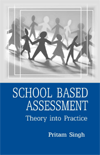

This book describes not only the theory of assessment and evaluation but also how best to put that theory into practice by the classroom teachers. Keeping in view the emergent emphasis on holistic development vis-Ã -vis assessment of learners', the book provided the practical guidelines to make learners' assessment more flexible, competency based, continuous, comprehensive, cooperative and participative. Growth oriented model is suggested for internal assessment. For effective implementation strategy of this model it was considered necessary to take cognizance of historical perspective of earlier attempts made, understand contemporary concepts in evaluation, philosophy underlying, intended objectives and conceptual map of school based assessment keeping in view the international scenario. Besides discussion of the usable tools and techniques of evaluation during formative and summative evaluation, for improving the measurement value of assessment emphasis on improving pedagogical value is given for improving learners' performance for which role of action research and other support services are recommended. Institutional Self-evaluation to improve the learning environments and crucial emerging issues are highlighted.
The book may serve as a practical guide for in-service teachers, pupil teachers, distant learners and academic staff of examination boards and other educational agencies for effective implementation of continuous and comprehensive assessment in schools.
This book describes not only the theory of assessment and evaluation but also how best to put that theory into practice by the classroom teachers. Keeping in view the emergent emphasis on holistic development vis-a-vis assessment of learners', the book provided the practical guidelines to make learners' assessment more flexible, competency based, continuous, comprehensive, cooperative and participative. Growth oriented model is suggested for internal assessment. Besides discussion of the usable tools and techniques of evaluation during formative and summative evaluation, for improving the measurement value of assessment emphasis on improving pedagogical value is given for improving learners' performance for which role of action research and other support services are recommended. Institutional Self-evaluation to improve the learning environments and crucial emerging issues are highlighted. The book would serve as a practical guide for in-service teachers, pupil teachers, distant learners and academic staff of examination boards and other educational agencies for effective implementation of continuous and comprehensive assessment in schools.
Dr. Pritam Singh, former Professor and Head, Department of Measurement and Evaluation of N.C.E.R.T, has rich professional experience of 40 years in the field of education. He specialised in Curriculum Development and Evaluation from London University as a Common Wealth Fellow. He has been actively engaged in organising training courses in evaluation for teachers, examiners and paper setters of various examination boards in India, besides UNESCO UNICEF fellows from various countries. After retirement, he served as Professor Research and then as Advisor Educational Assessment at Mauritius Examination Syndicate for four years. Dr. Singh has to his credit about 100 papers, monographs and other assessment related conceptual material besides about 10 Consultancy Mission Reports related to UNESCO Assignments on testing, curriculum and examination reform.
Preface
1. Historical Perspective of Internal Assessment
1.1 Assessment Practices upto the 20th Century
1.2 Development in Pre-independence India
1.3 Making School Based Assessment more Valid?
1.4 Understanding Role of Assessment Objectives
1.5 Specification of Learning Objectives
2. Contemporary Concepts in Educational Evaluation
2.1 Tripartite Classification of Terms
2.2 Basic Principles of Educational Evaluation
2.3 Basic Characteristics of Evaluation
2.4 Steps Involved in Process of Evaluation
2.5 Providing Feedback and Needed Correctives
3. Philosophy Underlying School Based Assessment
3.1 Faith and Conviction in Teachers' Competence
3.2 Concern for Holistic Assessment and Formative Evaluation
3.3 Concern for Competency Based Criterion-Referenced Testing
3.4 Concern for Diagnostic Testing and Remedial Instruction
3.5 School Based Assessment-A Total School Concept
3.6 Conceptualisation of Belief and Practice of S.B.A.
4. Intended Objectives of School Based Assessment
4.1 Cognizance of Intended Learning Outcomes
4.2 Ensuring Acceptability of S.B.A. by Stake Holders of Reform
4.3 Gathering more Valid And Comprehensive Evidences About Students' Holistic Development
4.4 Making Assessment more Democratic and Learner Friendly
4.5 Improving Pedagogical Value of Measurement
4.6 Ensuring Equity and Excellence in Testing
5. Key Concepts Underlying School Based Assessment
5.1 Public Acceptability of the Scheme
5.2 Continuity and Comprehensiveness of Assessment
5.3 Developmental, Standard Setting and Attainment Targeted
5.4 Quality of Measurement Tools and Techniques and Meaningful Reporting
5.5 Adaptability and Flexibility in Assessment
5.6 Meaningful Reporting of Students' Performance
5.7 Accountability of Practioners
5.8 Cost Effectiveness and Time Targetted Implementation
6. School Based Assessment: International Scenario
6.1 Towards Democratic Evaluation
6.2 Towards Competency Based Attainment Targeting
6.3 Towards Holistic Criterion Referenced Assessment
6.4 Ensuring Inter-School Comparability of Learners' Assessment
6.5 Towards Quality Assurance System
6.6 Towards Mix of Internal and External Assessment
7. Conceptual Map of School Based Assessment
7.1 Philosophy and Paradigm of Assessment
7.2 Assessment Components and Modes of Assessment
7.3 Methodology of Grading, Summarization and Reporting
7.4 Managing the School Based Assessment Efficiently
8. Suggested Model of School Based Assessment
8.1 Need for Growth Oriented Model of Assessment
8.2 Frame Factors for School Based Assessment
8.3 Adopting Quality Control Measures
8.4 Using Relevant Techniques and Tools of Assessment
8.5 Methodology of Grading and Data Processing
8.6 Judgmenting, Decision Taking and Reporting
9. Operational Strategy for Effective Implementation of S.B.A.
9.1 Adopting Democratic Mode of Evaluation
9.2 Planned Introduction and Follow-up of S.B.A.
9.3 Motivating and Empowering the Teachers
9.4 Logistic for Minimizing Subjectivity in Assessment
9.5 Providing Research and Other Support Services
9.6 Proper Monitoring, Evaluation and Supervision
9.7 Ensuring Autonomy, Transparency and Accountability
10. Promoting Quality of Education Through School Based Assessment
10.1 Stating Success Indicators in Observable Terms
10.2 Adopting Sustainable Strategy of Implementation
10.3 Using Reflective, Formative and Summative Evaluation
10.4 Undertaking Diagnostic Testing and Remedial Instruction
10.5 Applying Quality Control Measures forgetter Assessment
10.6 Using Evaluation as Feedback Device for Improving Teaching Learning Process
11. Undertaking Institutional Self-Evaluation (I.S.E.)
11.1 Nature, Purpose and Scope of I.S.E.
11.2 Assessment Components in Institutional Self-Evaluation
11.3 Pluralistic Approaches for Data Collection and Processing
11.4 Undertaking Humanistic Illuminative Evaluation
11.5 Using Institutional Self-evaluation for Improving Schools' Learning Environment
12. Providing Research and Other Support Services
12.1 Nature, Purpose and Scope of Research in S.B.A.
12.3 Providing Support Material for Encouraging Teachers for Studies
12.4 Determining Interests and Attitudes of Students for Better Teaching
12.5 Development and Assessment of Positive Attitudes
12.6 Using Research Based outcomes to Improve S.B.A.
13. Where Do We Fail in School Based Assessment?
13.1 Inconsistency in Belief and Practice of S.B.A.
13.2 Unrealistic Planning and Inadequate Preparation
13.3 Ineffective Implementation Strategy
13.4 Unplanned Introduction of Reform
13.5 Insufficient Support Services
13.6 Unrealistic Summative Evaluation
14. Crucial Emerging Practical Issues
14.1 How Best to Make Scheme Acceptable?
14.2 How Best to Minimise Teachers' Subjectivity in Assessment?
14.3 How Best to Moderate Teachers' Assessment?
14.4 How Best to Ensure Inter-school Comparability of Assessment Standards?
14.5 How Best to Combine Internal and External Assessment?
14.6 How Best to Ensure Transparency Autonomy and Accountability of Teachers?
References
Index