

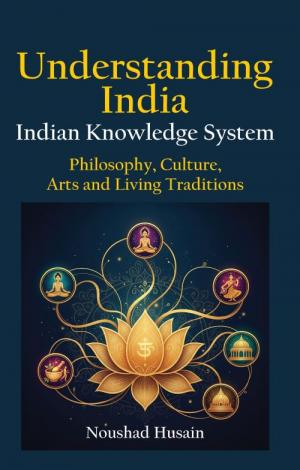

PHILOSOPHY, CULTURE, ARTS AND LIVING TRADITION
pp xiv+301
The volume is designed in alignment with the NCTE Curriculum Framework for the Integrated Teacher Education Programme (ITEP). The book introduces learners to India’s rich epistemic traditions, civilizational values and cultural heritage that have shaped its identity across centuries. Covering philosophical systems, epics, arts, language, polity, economy, environmental ethics and educational ideals, it presents a holistic vision of knowledge rooted in the spirit of NEP 2020. Written in a clear and accessible style, this book is an essential resource for ITEP, B.Ed. and M.Ed. students, fostering pride in India’s intellectual heritage and its contemporary relevance.
Prof. (Dr.) Noushad Husain is a senior academician, educationist and administrator with over twenty-five years of experience in teaching, research and academic leadership in teacher and higher education. He currently serves as Professor and Principal at MANUU Campus, Bhopal, under Maulana Azad National Urdu University, Hyderabad. He previously held key positions including Principal, MANUU CTE Asansol; Dean, School of Education and Training; Head, Department of Education and Training; and Controller of Examinations at MANUU. His academic interests include ICT and AI in education, digital pedagogy, research methodology, educational measurement and academic integrity, contributing to curriculum reform and quality assurance aligned with NEP 2020.
Preface
List of Figures
Chapter 1
Foundations of the Indian Knowledge System/ 1
Meaning of Indian Knowledge System (IKS) / 1; Definitions of Indian Knowledge System (IKS) / 1; Learning Outcomes / 1; Domains of the Indian Knowledge System (IKS) / 2; Scope of Indian Knowledge System (IKS) / 4; Understanding Indian Ethos / 5; India’s Prosperity and Ancient Knowledge Traditions / 8; Importance of Vedic Literature / 8; Classification of Knowledge / 8; Historicity and Development of IKS / 13; British Empire and Decline of Indigenous Education / 14; Realising the Need for Change / 14; Need to Revisit Our Ancient Knowledge, Traditions and Culture / 15; Importance of Ancient Knowledge / 16; Key Features of the Indian Knowledge System (IKS) / 16; Relevance of IKS in the Modern World / 18; Indian Knowledge System and NEP 2020 / 19; The Future Role of Indian Knowledge Systems / 19
Chapter 2
Vedic Vision of Knowledge and Life/ 21
Meaning of the Vedic Corpus / 21; Learning Outcomes / 21; The Four Vedas / 23; The Vedāṅgas (वेदाङ्ग) (Auxiliary Disciplines) / 27; Vedic Life and Society / 31; Distinctive Features of Vedic Thought / 32; Contemporary Relevance of Vedic Wisdom / 33
Chapter 3
Philosophical Pathways of India/ 37
Meaning of Darśana / 37; Definitions of Darśana / 37; Learning Objectives / 37; Purpose of Darśana / 38; Distinction from Western Philosophy / 39; Classification of Darśanas / 42; The Six Āstika Schools of Indian Philosophy / 42; The Nāstika Systems / 44; Unique Features of Indian Philosophy / 45; Contemporary Relevance of Indian Philosophy / 47
Chapter 4
Sources of Wisdom in Epics, Puranas and Folk Traditions/ 50
Purāṇas / 50; Meaning of Purāṇa / 50; Learning Outcomes / 50; Key Aspects of Purana / 51; Definitions of Purāṇa / 51; Structure of the Purāṇas / 52; Major Purāṇas / 53; Role of Purāṇas in Transmitting Religious and Cultural Values to Common People / 54; Itihāsa – Epics as Sources of Wisdom / 55; Rāmāyaṇa / 56; Mahābhārata / 58; Nīti-śāstras and Subhāṣitas / 60; Folk Traditions as Knowledge Systems / 63; Contemporary Relevance of Epics, Purāṇas, Folk Traditions and Subhāṣitas / 65x Understanding India: Indian Knowledge System
Chapter 5
Aesthetic Expressions in Fine Arts/ 69
Meaning of Fine Arts / 69; Learning Outcomes / 69; Scope of Fine Arts / 70; Classification of Fine Arts in Indian Knowledge Systems (IKS) / 71; Objectives of Fine Arts in Indian Knowledge Systems (IKS) / 73; Characteristics of Fine Arts in Indian Knowledge Systems (IKS) / 74; Importance of Fine Arts in Indian Knowledge Systems (IKS) / 75; Religious and Philosophical Dimensions of Fine Arts / 76; Dimensions of Indian Fine Arts / 76; Arts and Spirituality / 84; Arts and Identity / 85; Art and Globalisation / 86; Contemporary Relevance of Fine Arts / 87
Chapter 6
Living Traditions of Performing Arts/ 90
Meaning of Performing Arts / 90; Learning Outcomes / 90; Scope of Performing Arts / 91; Philosophical Basis of Indian Performing Arts / 92; Characteristics of Performing Arts / 93; Objectives of Performing Arts / 93; Characteristics of Performing Arts / 94; Importance of Performing Arts in Indian Knowledge Systems (IKS) / 95; Indian Dance Systems / 96; Indian Music Traditions / 101; Theatre and Drama Traditions in Indian Knowledge Systems / 111; Performing Arts and National Identity / 113; Contemporary Relevance of Performing Arts / 115
Chapter 7
Linguistic Heritage and Literary Treasures/ 118
Oral Traditions and Early Linguistic Heritage / 118; Śruti / 118; Learning Outcomes / 118; Smṛti / 120; Use of Precise Phonetics in Preserving Vedic Hymns / 121; Storytelling, Folk Songs, Ballads and Proverbs Carried Forward Cultural Values / 123; Language Families of India / 124; Sanskrit Literature / 131; Religious Literature / 133; Regional Language Literatures / 134; Folk Literature / 136; Modern Indian Literature / 138; Contemporary Relevance of Literature / 140
Chapter 8
Principles of Polity and Law in Indian Tradition/ 143
Kingship and Types of Government / 143; Learning Outcomes / 143; Kingship / 144; Qualities of an Ideal King / 144; Types of Government / 145; Guidance of Kings by Priests, Ministers and Assemblies / 146; Local Administration / 148; Basis of Law: Dharma and Its Sources / 149; Criminal Justice System / 150; Nīti-śāstras and Arthaśāstra / 151; Lessons for Modern-Day India / 154; Towards a Tradition-Driven Equitable and Just Polity and Law System / 155
Chapter 9
Economic Life from Harappans to Guptas/ 158
Indian Economy from the Stone Age to the Guptas / 158; Learning Outcomes / 158; Trade and Commerce / 168; Land Ownership, Land Grants and Revenue / 171; Arthashastra: Ideas, Criticism and Relevance / 176Contents xi
Chapter 10
Ethos of Environment and Sustainability/ 182
Society’s Perceptions of Natural Resources / 182; Learning Outcomes / 182; Sustainable Architecture and Urban Planning / 189; Indigenous Agricultural Practices / 194; Health Traditions and Ecological Balance / 198; Indigenous Solutions to Environmental Challenges / 204; Contemporary Relevance of Ancient Indian Ecological Wisdom / 206
Chapter 11
Indian Perspectives on Philosophy, Ethics and Values/ 210
Schools of Philosophy and Ethical Thought / 210; Learning Outcomes / 210; Āstika Schools / 211; Nāstika Schools / 233; Vedānta Systems / 243; Ethics, Morality and Social Dilemmas / 246; Spirituality and Social Responsibility / 247; Ethics in a Technologically Volatile World / 248; Practical Vedānta for Well-being / 249; Contemporary Relevance / 250
Chapter 12
Culture and Lifestyle in Indian Ethos/ 253
Food Traditions and Values / 253; Learning Outcomes / 253; Clothing and Textile Traditions / 261; Sports and Martial Arts / 263; Lifestyle of Yoga / 265; Modern Relevance / 266
Chapter 13
Education System in Ancient India/ 269
Education in Ancient India / 269; Learning Outcomes / 269; Philosophical Foundations of Ancient Indian Education / 270; Aims of Education in Ancient India / 272; The Gurukula and Āśrama Systems / 273; Curriculum and Subjects of Study / 274; Methods of Teaching and Learning / 276; Teacher-Student Relationship (Guru–Śiṣya Paramparā) / 278; Centres of Higher Learning / 279; Evaluation and Discipline / 281; Role of Women and Inclusivity / 282; Key Features of Ancient Indian Education / 283; Decline and Challenges / 284; Contemporary Relevance / 286
Bloom’s Taxonomy-Based Question Bank 290
Glossary 295
References 298