



pp x+209
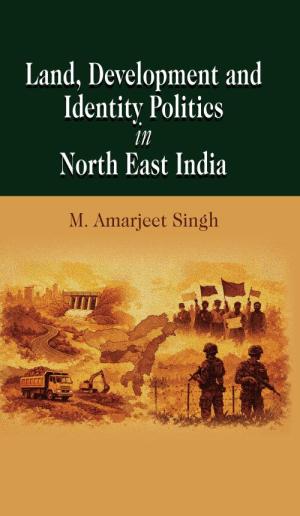
Development is not merely about an increase in per capita income, but it is also about improvement in quality of our lives. Ironically, development never takes place uniformly. At the same time, the government is compelled to acquire land from the land-owners for undertaking development activities to meet rapid increase in population, industrialisation and urbanisation. The acquisition of land from the land-owners for undertaking development activities is not an easy task. Furthermore, in some places of India’s north east region, the land is closely intertwined with identity politics and conflict since many people considered land a crucial element for protection of their unique cultural identities. The volume may be found useful by all the stakeholders having interest in the subject and the region.
M. Amarjeet Singh is Professor and Director at the Centre for North East Studies and Policy Research, Jamia Millia Islamia, New Delhi. Singh has previously worked with two prestigious institutions: Institute for Defence Studies and Analyses, New Delhi, and National Institute of Advanced Studies, Bengaluru. Singh has also written extensively as well conducted research projects on conflict and identity politics, development and migration.
Acknowledgement
Introduction by M. Amarjeet Singh
About the Book/ 4
1. Mirroring Self in the Shadow: Land, Identity and Development in North East India/ 7
Gorky Chakraborty
Introduction / 7; Interpreting Land in Colonial Peripheries / 8; The Hills / 9; The Floodplains of Brahmaputra / 13; Land, Identity Conundrum in the Hills / 16; Transience of Land and Identity in the Floodplains / 19; Conclusion / 21
2. Neoliberalism, Development and Emerging Issues of Land in Assam
Rabin Deka, Partha Pratim Borah, Shofiul Alom Pathan
Introduction / 25; Neoliberalism and Development / 27; Locating North East India in the Development Process / 28; North East as a Resource Frontier? Question of Land and Development / 29; Development, Displacement and Changing Land Relations in Assam / 30; Land, Autonomy and Infrastructure / 32; Locating the Question of Eviction in Contemporary Assam / 34; Conclusion / 36;
3. Forest Rights and Development Project: A Case Study of Sevoke-Rangpo Railway Project/ 39
Angela Dhamala, Vimal Khawas
Introduction / 39; Study Area / 40; Background and Context / 41; Developmental Interventions / 42; Sevoke-Rangpo Railway Project / 43; Land Acquisition Status / 44; Forest Right—A Spatial Justice View / 46; Materials and Methods / 47; Findings of the Study / 47; Discussions / 53; Conclusion / 55
4. Evicted in the Name of Nature/ Locating Land Loss in the Forest Landscape of Kaziranga National Park/ 59
Bijaya Sarmah
Introduction / 59; How Nature is Imagined, Landscape is Perceived? / 61; Eviction, Inevitability and Legality: Public Interest vs Informed Consent / 62; Land, Land Loss and Land Reclaiming / 64; What are the Claims Over Land? Who should Rightly get it? / 66; Neo-liberal Conservation Challenges and Growing Securitization / 69; Conclusion / 73
5. Assam and Meghalaya: Unresolved Border Disputes/ 76
Sanborlang Tynsong
Introduction / 76; Reasons for the Conflict / 77; Role of the Central and State Governments / 80; Areas of Distinction and Territories with Assam / 82; Development in the Disputed Areas / 84; Perceptions of People in Disputed Areas / 84; Conclusion / 85
6. Demand for Autonomy of TCL Region of Arunachal Pradesh/ 87
B. Komow
Introduction / 87; Formation of Arunachal Pradesh as a State / 88; Political Development in Arunachal Pradesh / 89; Demand for Autonomy of TCL Region / 90; Issues and Challenges in TCL Region / 94; Autonomy – A Way Forward? / 94; Development Initiatives / 95; Conclusion / 98
7. Market Forces and Indigenous Land Tenure System: A Case of the Tangkhul Nagas of Manipur/ 101
Martin Kamodang, Shimreipam R.S.
Introduction / 101; Indigenous Knowledge and Land / 101; Theorizing Land / 102; Tangkhul Naga / 103; Understanding Property Rights / 105; Genesis of Monetary Economy / 108; Impact of Monetary Economy / 108; Market Forces and the Emergence of New Values / 109; Privatisation of Land / 110; Changing Customary Rights and Traditions / 111; Way Forward and Conclusion / 112
8. Efficacy of the Sixth Schedule and Article 371 in Protecting Indigenous Land Rights: An Analysis/115
Naveen Kumar, Raajdwip Vardhan
Introduction / 115; Historical Development during the British Period / 116; The Sixth Schedule: Formation, Implementation and Efficacy / 117; Formation of the Sixth Schedule / 118; Sixth Schedule and Land Rights – An Analysis / 120; Shortcomings and Challenges / 121; Article 371 and its Efficacy in Safeguarding Land Rights / 123; Sixth Schedule to Article 371: A Historical Overview / 123; Special powers under Article 371-A & 371-G / 124; Asymmetric Federalism as a Solution to Insurgency / 126; Conclusion / 128
9. Manipur: Land Use Practices and Conflicts
N. Somorendro Singh/ 132
Introduction / 132; Impact of Divisive British Colonial Ideologies and Policies in North East India / 134; Constitution, Land Rights and Identity Politics / 134; Democratic and Customary Land Use Practices and Rights / 137; Separatist Politics in Manipur Hills / 140; Abnormal Growth in Population / 141; Emerging Kuki Politics and Conflict / 143; Concluding Observations / 144
10. Land Use Patterns and Ethnic Politics in Manipur: An Assessment/ 149
Elangbam Ashakiran Chanu, Komol Singha
Background / 149; Land Resource Sharing in a Multi-ethnic Society / 151; Land Use Pattern in Manipur / 152; Land Use Pattern of the Nagas in the Hills / 152; Land Use Pattern of the Kukis in the Hills / 153; Land Use Pattern of the Meiteis in the Valley / 153; Duality of Authority and Conflict / 154; Apprehension of Land Alienation / 155; Changes in the Tribal Land Use Pattern and the Way Forward / 157
11. Territorialisation, Land Politics and Regional Press
Athikho Kaisii/ 162
Introduction: Situating the Context / 162; Territory, Territoriality and Press / 163; Regional Press and Territory in Pre-independence: An Overview / 165; Proliferation of Press in North East Region / 166; Territoriality and English newspaper name / 169; Case Study / 170; Inclusivity of editorial analysis in the Imphal Free Press and the Morung Express / 174; Conclusion / 177
12. Spaces, Places, and Practices: Exploring Identity Construction through Bhaona in Majuli
Mrigakshi Parashar/ 180
Spaces as Places Shaped by Human Experiences, Relationships, and Symbols / 180; I dwell, you dwell, I am, you are: Landscapes, culture, and identity / 186; Majuli, neo-Vaishnavism and the Assamese Identity / 189; Conclusion / 192;
13. (Dis)Placed Divisions: Analysing Siddhartha Deb’s Point of Return, and Kishalay Bhattacharjee’s Where the Madness Lies
Jaya Yadav/ 195
Introduction / 195; Discussion / 196; Conclusion / 206
Contributors 208